The Onggi Trilogy: Part One
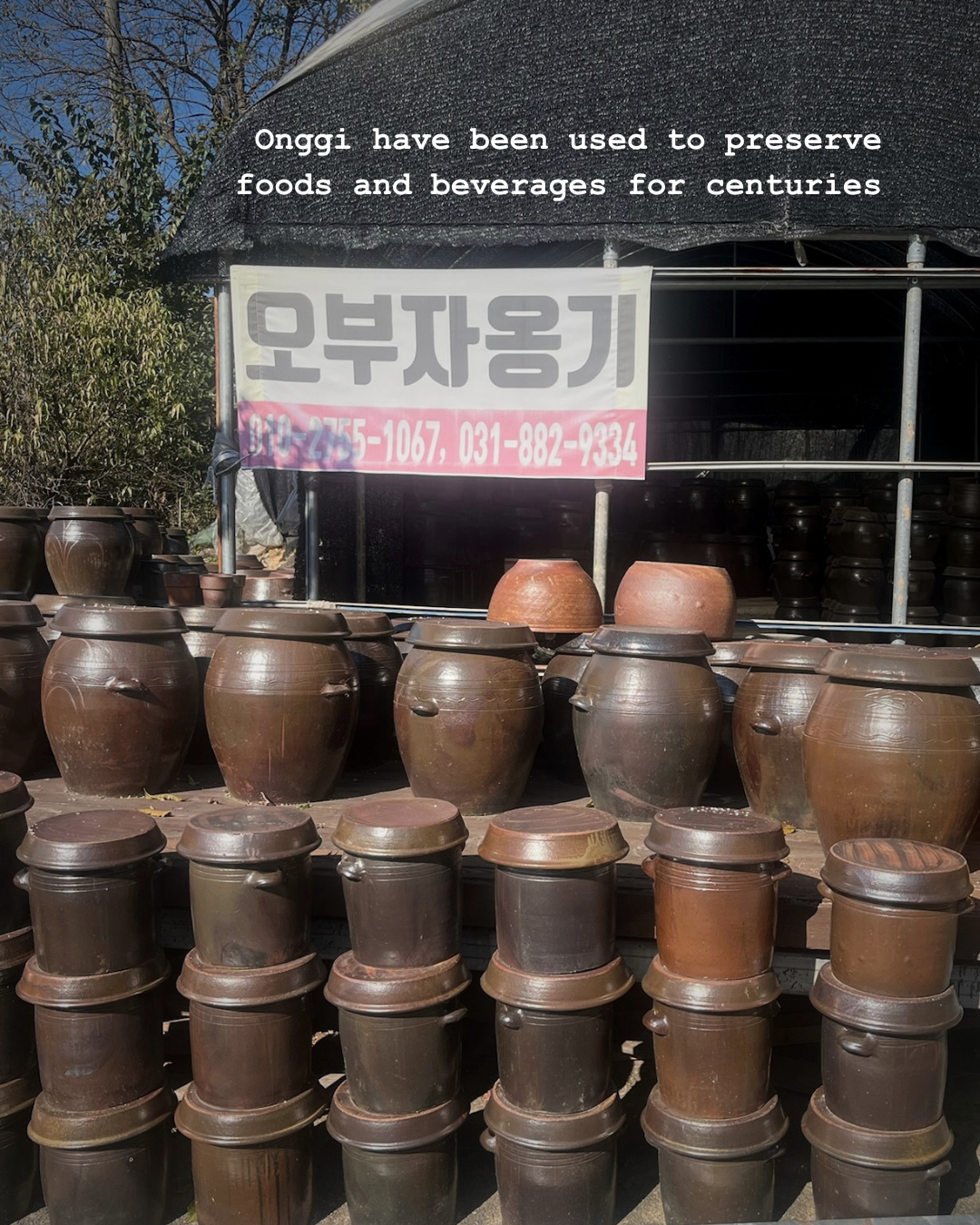
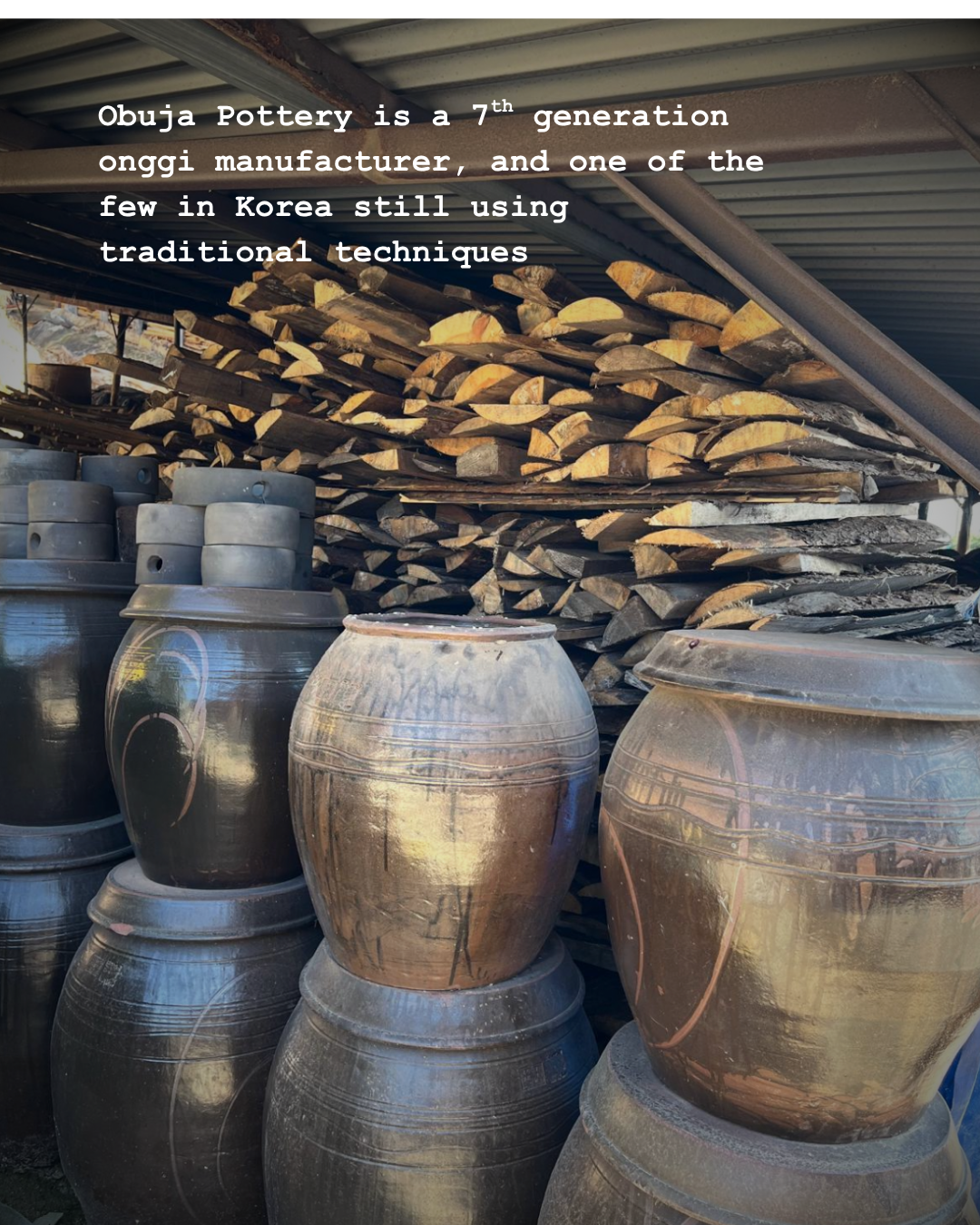
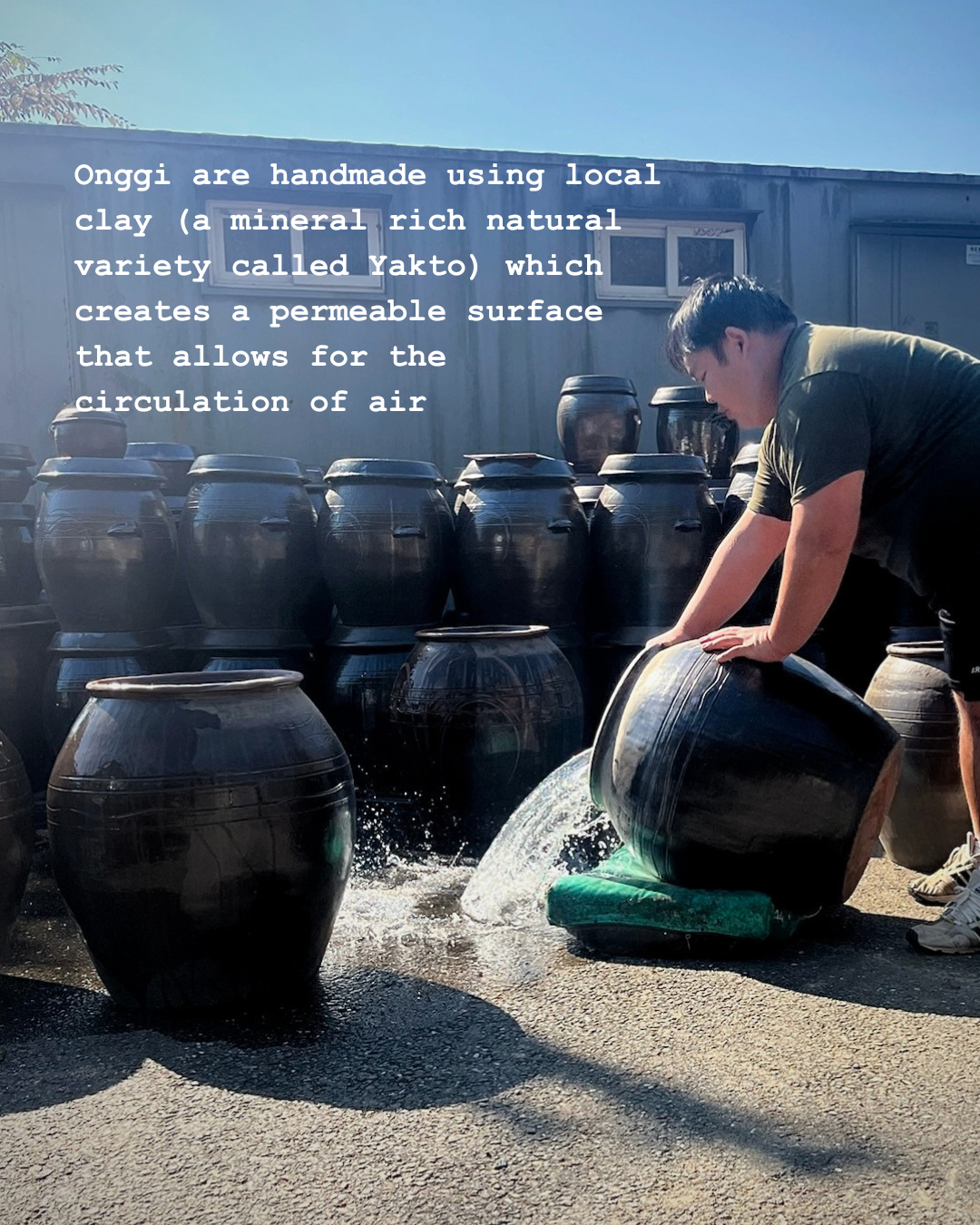
On our last trip to Korea we travelled to visit Objua pottery; a 7th-generation manufacturer in Yeoju, the centre of the ceramics industry in South Korea. They are one of the few remaining traditional Onggi producers in Korea, producing them by hand and using local clay and traditional techniques. Their lineage is keeping the craft of Onggi alive.
Central to Onggi, and what makes them ideal as a fermentation vessel, is the glazing process. The raw vessels are glazed with jaetmul 잿물 - a mixture of wood ash and yakto (a type of clay that is composed of leaf detritus) - and then fired in a 40-yard-long wood-fired kiln. This glaze creates microscopic pores in the clay that allow the vessel to ‘breathe’ and for fermentation to take place.
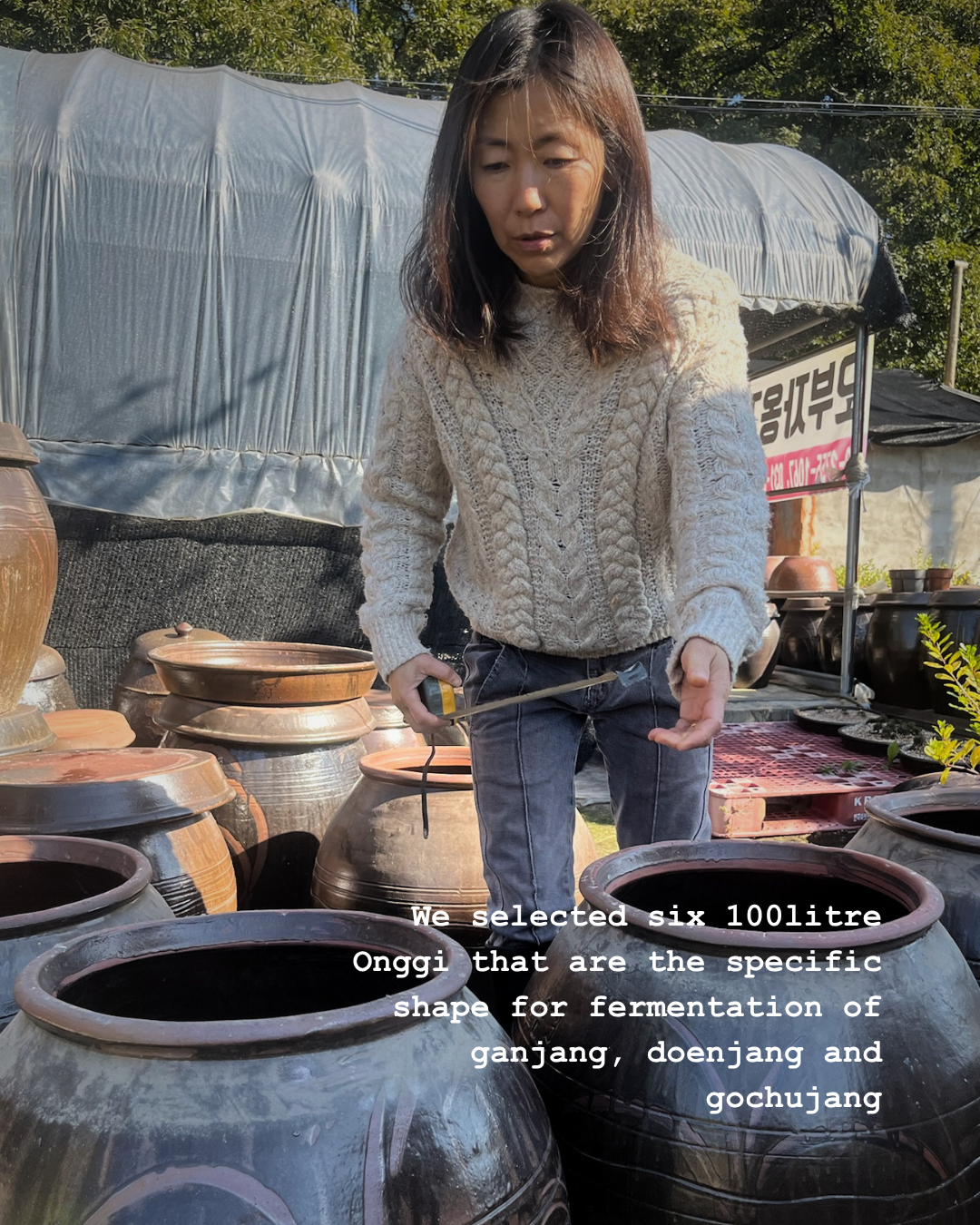
We selected six 100litre onggi from Obuja pottery. While onggi come in many different shapes (each suitable for a different purpose) ours are the specific shape for fermentation of ganjang, doenjang and gochujang. The pieces are unique and deeply beautiful, and their size should allow us to produce considerably larger quantities.
The Onggi Trilogy: Part Two will follow later this week. Stay tuned.